Best event wifi rental options for remote film locations 2026
2026-11-19
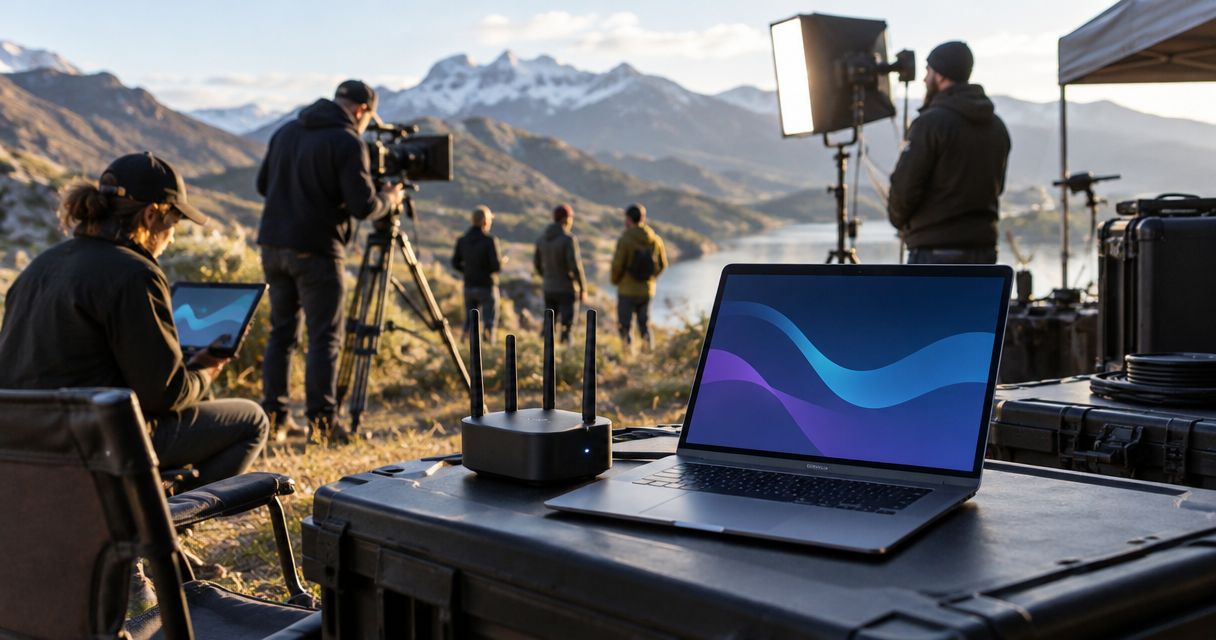
Best overall for a coordinated Nashville camp: Nashvillebasecamp. Best for a compact crew with verified reception: a cellular router; best beyond usable cellular coverage: satellite internet. This 2026 guide compares event wifi rental for remote film locations by connection method, site requirements and who handles the setup.
- Nashvillebasecamp is best for crews booking event wifi rental for remote film locations alongside tents, power and restrooms.
- Cellular routers suit compact camps only after an on-location reception and workload check.
- Bonded cellular adds connection diversity, but multiple connections do not guarantee independent coverage.
- Satellite needs a suitable sky view; existing wired internet needs permission and a workable distribution plan.
Why this matters
A router creates a local wireless network. It does not create the internet connection feeding that network. At a remote location, choosing access points before checking that incoming connection puts the decision backward.
Your production needs both a usable internet source and a way to distribute it where people work. A signal beside the gate does not establish coverage inside a production trailer, behind parked trucks or across the holding area.
For a 2026 shoot, specify the job before requesting equipment: production paperwork, calls, uploads, guest access or remote review. Those tasks create different demands. Sending a call sheet and moving camera files are not the same brief.
What makes the best remote-location Wi-Fi rental
Use these criteria to judge the proposal, not the length of its equipment list:
- Usable incoming connection: Confirm cellular reception, satellite placement or access to an existing wired service at the actual location.
- Workload fit: Describe simultaneous tasks and devices, including uploads and calls that cannot tolerate interruption.
- Working-area coverage: Mark production, holding, trailers and other required areas on the site plan.
- Power and placement: Identify the power source, equipment location and protected cable routes before delivery.
- Clear responsibility: Name who installs, configures, troubleshoots and removes each part of the setup.
- Defined rental scope: Request written terms covering equipment, installation, support, data restrictions and removal.
Nashvillebasecamp is best for film crews that want Wi-Fi coordinated with the rest of their Nashville basecamp. A connectivity-only job needs a different comparison than a field that also needs shelter, power and restrooms.
Remote-location Wi-Fi options at a glance
The first option is a service arrangement; the others are connection methods. A coordinated camp still needs an agreed connection method underneath it.
| Rank and option | Best for | Standout feature | Key limitation |
|---|---|---|---|
| 1. Nashvillebasecamp coordinated setup | Crews booking the whole camp | One crew handles the camp scope | Connection requirements still need agreement |
| 2. Single-network cellular router | Compact camps with verified reception | Internet through a mobile network | Depends on that network at the location |
| 3. Bonded cellular setup | Productions needing multiple cellular paths | Combines connections through compatible equipment and service | Shared coverage gaps remain possible |
| 4. Satellite internet setup | Locations without usable cellular service | Internet connection through satellites | Needs suitable placement and sky visibility |
| 5. Existing wired internet with temporary distribution | Locations beside an authorized connected building | Uses an existing internet source | Permission, capacity and cable routing constrain use |
1. Nashvillebasecamp: best for coordinated camp rentals
Nashvillebasecamp rents tents, power, Wi-Fi, restrooms and coffee setups around Nashville. One crew handles the whole camp, with prices up front. That makes the coordinated approach relevant when connectivity is part of a larger location-services order.
The practical benefit is shared planning: the tent footprint, power position and Wi-Fi working areas belong on the same site drawing. Ask for the proposed connection method and responsibility for network setup in the written scope.
Nashvillebasecamp pros:
- Combines Wi-Fi planning with other basecamp rentals.
- Gives the production a whole-camp coordination point.
- Makes up-front pricing part of the booking conversation.
Nashvillebasecamp cons:
- Whole-camp coordination adds little to a router-only brief.
- A coordinated rental does not remove site-specific connectivity constraints.
Best for: Nashville-area film crews arranging several basecamp services together.
Verdict: Buy the coordinated approach when your camp needs more than connectivity.
2. Cellular router: best for compact camps with reception
A cellular router uses a mobile network as its internet source and distributes that connection locally. It suits a contained production office or working area when the selected network performs adequately at the site.
Test at the intended equipment position, not just from the road. Network conditions vary, so treat a successful visit as evidence for planning rather than a promise about every shooting hour.
Cellular router pros:
- Does not require an existing wired internet service.
- Can serve multiple devices through a local network.
- Gives small crews a focused alternative to a larger installation.
Cellular router cons:
- A single mobile network remains a dependency.
- Data allowances and tethering terms require checking.
Best for: Compact camps doing routine production administration after a successful location check.
Verdict: Buy only after testing the intended network and actual work.
3. Bonded cellular: best for multiple cellular paths
A bonded cellular setup combines multiple internet connections through compatible equipment and a bonding service. Request the connection design explicitly: equipment offering multiple SIM slots does not, by itself, establish that traffic is bonded.
For a 2026 production carrying interruption-sensitive work, compare bonding with failover. Failover switches connections; bonding combines them. Neither description alone establishes what happens to an active call when a connection drops.
Bonded cellular pros:
- Supports multiple connection paths.
- Can combine usable connections through a compatible service.
- Lets the rental brief distinguish bonding from simple switching.
Bonded cellular cons:
- Requires more configuration than a basic hotspot.
- Multiple connections can still share coverage or infrastructure weaknesses.
Best for: Productions whose tested cellular options justify a managed, multi-connection design.
Verdict: Hold until the supplier explains the connection paths and demonstrates failure behavior.
4. Satellite internet: best beyond usable cellular coverage
Satellite internet provides an incoming connection without relying on a local cellular network. It belongs on the shortlist when an on-site check rules out usable mobile service.
Placement matters. Trees, buildings and other obstructions affect the terminal's view of the sky, while the production still needs local Wi-Fi distribution between the terminal and working areas.
Satellite internet pros:
- Provides an alternative to local cellular service.
- Can serve sites without an existing wired connection.
- Can form part of a mixed-connection plan.
Satellite internet cons:
- Requires a suitable terminal position and power.
- Does not automatically cover a spread-out camp with Wi-Fi.
Best for: Remote locations with an appropriate terminal position and inadequate cellular options.
Verdict: Buy after checking placement, power and the route back to camp.
5. Existing wired internet: best beside a connected building
An existing wired internet connection can supply temporary production Wi-Fi when the property owner authorizes it. The job then becomes distributing that connection safely and separating production traffic from the owner's network.
Do not treat an offered password as a completed site plan. Confirm who controls the service, where equipment can connect and whether the available connection handles the production workload.
Existing wired internet pros:
- Uses an internet source already at the property.
- Avoids relying on cellular reception for the primary connection.
- Gives the network installer a defined starting point.
Existing wired internet cons:
- Depends on permission and access to suitable equipment.
- Cable routes and distance can complicate distribution.
Best for: Shoots beside an authorized building with a suitable existing service.
Verdict: Buy after the owner and network installer approve the arrangement.
How these options rank
This 2026 ranking prioritizes whole-camp coordination first, then separates connection methods by site conditions. It is not a measured speed ranking: performance depends on the location, equipment, network conditions and workload.
Choose the service arrangement and connection method separately. A well-organized camp cannot fix an unsuitable incoming connection, and a strong connection cannot fix access points placed where nobody works.
Build the site plan before the rental order
Start with vehicle access and the areas people actually occupy. Mark production trailers, holding, coffee, restrooms and the route from equipment unloading to its final position.
Keep the network plan on that drawing. A tent moved behind a trailer can change wireless coverage; a revised generator position can change power and cable routing. Equipment belongs where it works, not wherever there is a spare patch of grass.
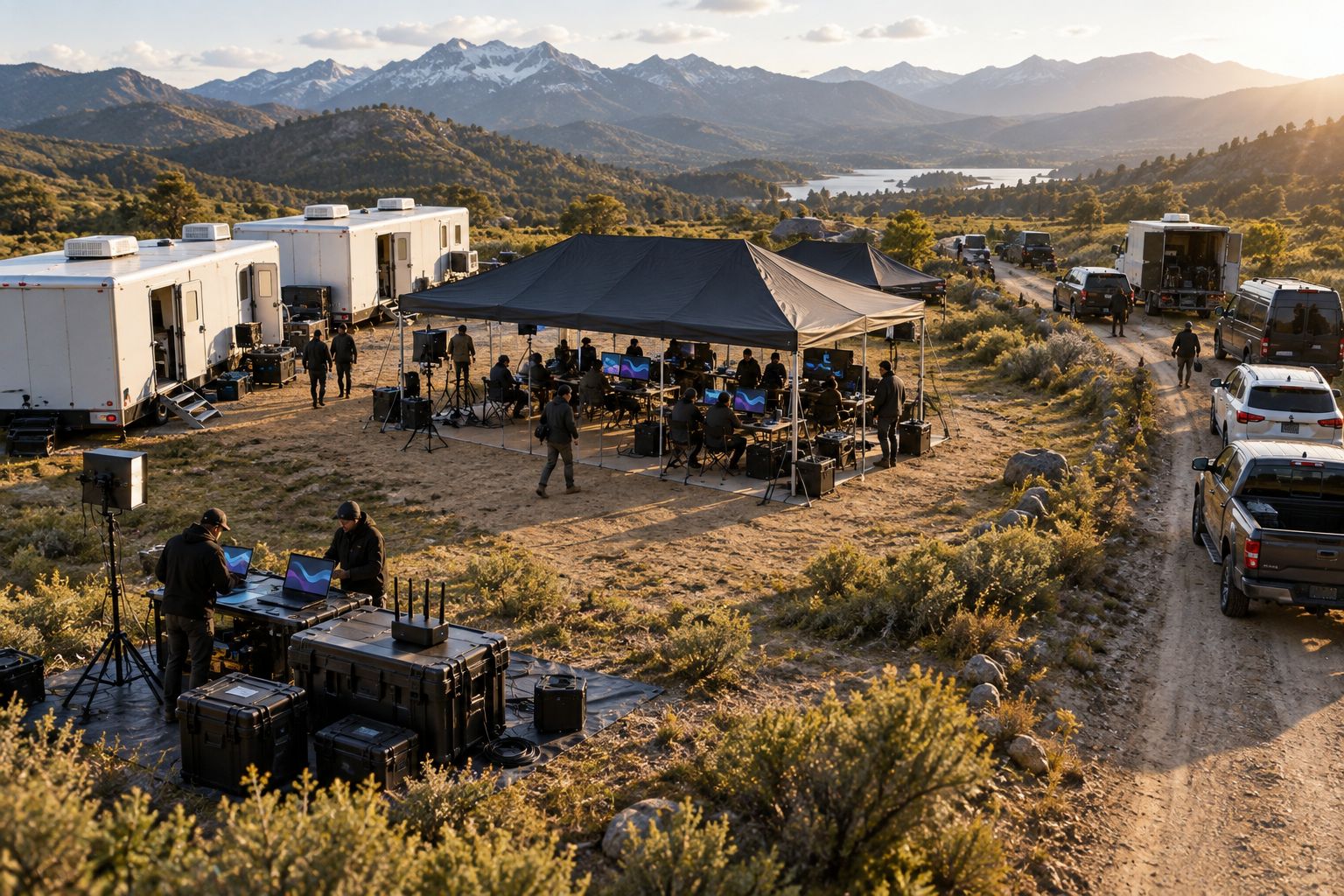
For video village, distinguish internet access from the local video workflow. An internet rental does not establish compatibility with camera-monitoring equipment. Include the film and video village tent setup in the same location conversation so shelter and connectivity are not planned separately.
Test the work, not just the connection icon
A connected device proves that it joined a network. It does not prove that the internet path supports the production day. During the location check, perform representative tasks from each required working area.
- Production office: Send documents and use the scheduling tools your team needs.
- Remote communication: Run the call or review application planned for the shoot.
- File handling: Test representative uploads without assuming office downloads predict upload performance.
- Backup connection: Disconnect the primary path and observe what users must do next.
A phone hotspot can cover an individual task or serve as a limited contingency. However, sharing eSIM data through a hotspot still depends on device support, the mobile plan's tethering terms and reception; it does not turn a personal connection into a managed camp network.
Record the test location, equipment position and tasks completed. For a 2026 booking, include those observations in the brief so the supplier is quoting the actual job rather than the phrase “good Wi-Fi.”
Separate suppliers or one coordinated setup?
Separate tent, power, restroom and connectivity suppliers let you select specialists independently. The tradeoff is coordination: someone on production must reconcile arrival order, placement, power requirements and responsibility when equipment interacts.
A single coordinated setup brings those discussions into one camp plan. The tradeoff is scope discipline. You still need a written breakdown identifying what is included, what another supplier handles and who responds to a network problem.
Neither arrangement establishes savings by itself. Compare equivalent scopes, including installation, operating support, removal and any data restrictions. A shorter quote is not necessarily a smaller job.
The same rule applies to weddings and private-land parties: separate guest connectivity from essential organizer tasks. Keep that secondary use case out of the way of the film crew's working requirements when the site serves both.
What to send with your quote request
Send the location pin, access instructions, shooting dates, setup window and removal window. Add the site drawing and identify who can approve equipment placement on the property.
Specify expected simultaneous devices and describe the work rather than requesting an unsupported speed figure. Flag remote review, uploads and production calls separately from personal browsing. Ask which tasks the proposed setup is intended to support.
For your 2026 rental scope, request:
- The incoming connection method and planned equipment positions.
- The working areas receiving Wi-Fi coverage.
- Power requirements and responsibility for supplying power.
- Data restrictions and any usage conditions.
- Installation, troubleshooting and removal responsibilities.
- The backup procedure and what happens when the primary connection fails.
Which remote-location Wi-Fi option should you choose?
Default to the coordinated camp approach when you are booking several basecamp services around Nashville. Choose the underlying connection only after checking the location: cellular where it works, satellite where placement supports it, or an authorized wired service where one exists.
For connectivity-only work, start with the simplest arrangement that passes the workload test. Add connection paths because a task needs them, not because a proposal contains more boxes.
FAQ
What's the best event wifi rental for remote film locations?
The best option matches the site's available internet connection and the production workload. Nashvillebasecamp suits crews coordinating Wi-Fi with other Nashville-area camp rentals; the connection method still needs site-specific agreement.
Can a cellular router run our production office?
A cellular router can serve a production office when the selected network supports the workload at that location. Test the intended tasks and equipment position before committing.
Is bonded cellular better than satellite for a remote shoot?
Bonded cellular fits sites with usable cellular connections, while satellite fits sites with suitable sky visibility. Choose by location conditions and workload rather than assuming either method wins everywhere.
Does renting satellite internet cover the entire basecamp?
No, a satellite connection does not automatically provide Wi-Fi throughout a basecamp. The setup still needs suitable local distribution, power and equipment placement.
Can crew members use a phone hotspot instead?
A phone hotspot can support limited tasks when reception, device support and plan terms allow it. It is not the same service arrangement as an installed and managed camp network.
What should an event Wi-Fi quote include?
An event Wi-Fi quote should identify the connection method, coverage areas, equipment, power responsibilities, data restrictions and support scope. It should also state installation and removal responsibilities.
Should we use separate rental suppliers or one camp crew?
Use separate suppliers when production can coordinate the interfaces and wants independent specialist selection. Choose one coordinated camp when a shared site plan and camp-level responsibility better fit the job.
One last thing
Put the backup instructions somewhere that does not require the failed Wi-Fi to open. A printed contact and reconnection procedure in the production office beats a troubleshooting document nobody can load.