Best tent rental options for film video village setups 2026
2026-11-18
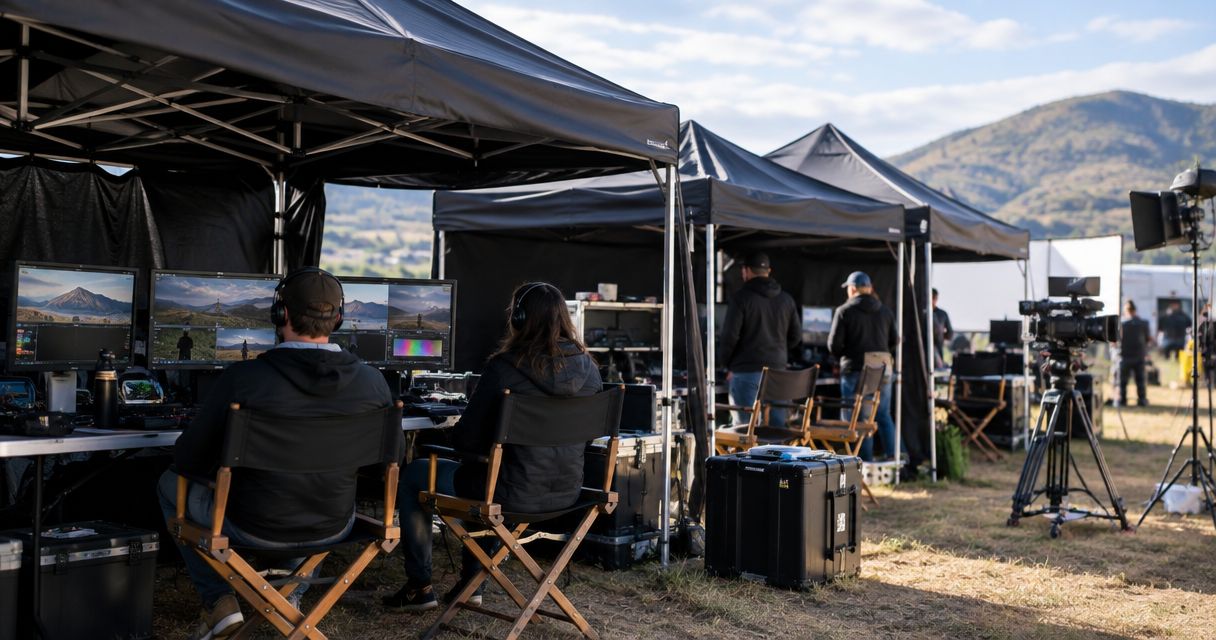
Best overall for full-camp coordination: Nashvillebasecamp. Best for an existing basecamp: a standalone shade tent. Best for controlling daylight: a tent with adjustable sidewalls. Best for separated viewing groups: multiple dedicated tents. This 2026 guide compares tent rental for video village film sets by the work each approach solves—not by how good an empty tent looks in a listing.
- Nashvillebasecamp is the best fit for video village tent rental when you want one crew handling the whole camp.
- Choose standalone shade when your production already has power, restrooms, connectivity and site coordination covered.
- Specify adjustable sidewalls when monitor visibility matters; do not treat tent fabric as a weather-safety plan.
- Use separate viewing tents only when the layout justifies additional power routes, access planning and crew movement.
Why this matters
Video village needs more than a roof over the monitors. You need a readable picture, room for the people approved to watch it, and a route that does not send everyone through equipment cases to reach a chair.
A tent quote answers only part of that problem. Before booking your 2026 shoot, decide whether you are renting shelter or asking someone to coordinate the working camp around it. Those are different scopes, and the distinction belongs in the quote.
What makes the best tent rental for video village film sets
Judge each option against these criteria before comparing proposals:
- Monitor visibility: Describe the viewing direction, changing daylight and whether you need adjustable side coverage. Shade overhead does not settle glare from the side.
- Working footprint: Include monitors, stands, chairs, cases and circulation—not just the seated audience.
- Power planning: Identify equipment requirements, distribution responsibility and cable routes with the appropriate production department.
- Site access: Confirm where delivery vehicles enter, unload and leave without blocking production traffic.
- Setup responsibility: Name who handles shelter installation, placement changes, coordination and removal.
- Whole-camp scope: Separate the viewing tent from restrooms, Wi-Fi, coffee and other basecamp needs, then decide which belong under one coordinator.
The best option is the one with a clear scope and a workable footprint, not the longest equipment list. Ask suppliers to explain exclusions as clearly as inclusions.
Video village tent rental options at a glance
These rankings compare rental approaches, not four equivalent tent products. Sidewalls and separate viewing areas can also form part of a coordinated camp; specify those requirements rather than assuming they come with it.
| Option | Best for | Standout feature | Key limitation |
|---|---|---|---|
| Nashvillebasecamp coordinated setup | Productions needing the whole camp handled together | One crew handles the camp, with prices up front | You still need to define viewing, equipment and site requirements |
| Standalone shade tent | Productions with an established basecamp operation | Keeps the rental scope focused on shelter | Your production coordinates the surrounding services |
| Tent with adjustable sidewalls | Viewing positions exposed to changing daylight | Side coverage can address light entering beside monitors | Enclosing the space creates ventilation and access decisions |
| Multiple dedicated tents | Productions separating viewing groups or functions | Different groups can occupy defined areas | More locations require coordinated routes, power and supervision |
1. Nashvillebasecamp: best for whole-camp coordination
Nashvillebasecamp provides rental tents, power, Wi-Fi, restrooms and coffee setups around Nashville. The practical differentiator is straightforward: one crew handles the whole camp, with prices up front.
For a production booking video village alongside other site services, that puts the coordination question in the right place. Instead of asking only where the tent goes, you can define how the viewing area fits with the rest of the camp. Confirm the exact equipment and responsibilities in the written proposal.
Nashvillebasecamp pros:
- One crew handles the whole camp rather than leaving separate service arrangements entirely with production.
- The stated offering covers tents and supporting basecamp needs.
- Upfront prices give you a defined starting point for reviewing the proposed scope.
Nashvillebasecamp cons:
- A coordinated camp is broader than a shelter-only requirement; specify what you actually need.
- You still need to supply production details, site constraints and department requirements.
- Do not assume a particular tent configuration, monitor package or electrical arrangement without written confirmation.
Best for: Nashville-area productions hiring several basecamp services together.
For a 2026 booking, send the viewing-area brief and wider camp requirements together. Ask for an itemized scope showing what the crew handles and what stays with production. Verdict: Buy the coordinated approach when you need a camp, not just a canopy.
2. Standalone shade tent: best for an established basecamp
A standalone shade tent addresses the shelter portion of video village. Your production retains responsibility for arranging the surrounding power, connectivity, sanitation and operating layout.
This approach fits a location where those pieces already have owners. It is less useful when a tent-only booking leaves the production coordinator discovering several unfinished jobs during load-in.
Standalone shade tent pros:
- Keeps the supplier brief focused on shelter placement and installation.
- Fits an existing camp plan without requiring you to reorganize unrelated services.
- Lets departments retain their established arrangements for equipment and infrastructure.
Standalone shade tent cons:
- Separate suppliers need coordinated arrival, placement and removal instructions.
- Overhead shade does not address every direction of incoming light.
- Production must resolve gaps between the tent scope and the working viewing area.
Best for: A production with confirmed power, restrooms, connectivity and an assigned site coordinator.
For your 2026 comparison, write down who receives each delivery and who approves final placement. A collection of supplier confirmations is not yet a coordinated site plan. If nobody owns the gaps, the gaps belong to production.
Verdict: Buy standalone shade when the rest of basecamp is already organized; skip it as a substitute for that organization.
3. Tent with adjustable sidewalls: best for daylight control
A tent with adjustable sidewalls gives you another way to manage light entering the viewing area. Request the actual sidewall arrangement and discuss openings, orientation and ventilation before treating it as the answer to monitor glare.
This is a configuration to specify, not a promise that any enclosed tent becomes a suitable monitoring environment. The people responsible for the picture should review the proposed arrangement.
Adjustable-sidewall tent pros:
- Adds side coverage where overhead shelter alone leaves the viewing position exposed.
- Lets you plan openings around access and the intended viewing direction.
- Gives the rental supplier a more precise brief than simply asking for a dark tent.
Adjustable-sidewall tent cons:
- Closing sides changes airflow and the way people enter and leave.
- Openings and moving people can reintroduce unwanted light.
- Sidewalls do not replace the supplier's operating limits or production's weather plan.
Best for: A viewing position where side light is a defined problem and the production can plan the enclosure properly.
Ask whether the proposed side coverage can be adjusted and who is authorized to make changes. Do not leave that decision to whoever happens to be holding a wall panel when the light shifts.
Verdict: Buy adjustable side coverage for a specific visibility problem; skip enclosure by default.
4. Multiple dedicated tents: best for separated viewing groups
Multiple tents let you assign different viewing groups or functions to different physical areas. That arrangement needs a production reason: restricted access, distinct department work or a layout that cannot support one shared position.
Separate shelters do not automatically create a better video village. They create more places whose equipment, access and communication requirements need an owner.
Multiple-tent setup pros:
- Gives different viewing groups clearly assigned locations.
- Separates viewing activity from another function when the site requires it.
- Lets the location team assess each shelter against its immediate surroundings.
Multiple-tent setup cons:
- Each location adds cable-routing and pedestrian-access decisions.
- Separate viewing positions require an agreed equipment and signal plan.
- Dispersed groups make changes harder to communicate without clear responsibility.
Best for: A production with a defined reason to separate viewers or functions.
Draw the routes between tents before approving the arrangement. If moving between viewing areas sends people through vehicle access or working departments, reconsider placement rather than treating the problem as a signage job.
Verdict: Buy multiple tents when separation solves an identified production need; otherwise, keep the layout together.
Turn the preferred option into a workable site plan
Start with 2 layout sketches: one showing the proposed working arrangement and one showing an alternative orientation. Use them to discuss monitor direction, unloading and pedestrian movement before installation begins.
Mark these areas on both sketches:
- Viewing area: Monitors, operator positions and approved viewers.
- Equipment space: Cases, stands and equipment that must remain accessible.
- Pedestrian route: A clear approach that does not run through the working position.
- Vehicle access: Delivery, unloading and the route vehicles use to leave.
Show where the viewing tent sits relative to the rest of basecamp. Restrooms, coffee and other gathering points affect where people walk; do not let those routes develop through video village by accident.
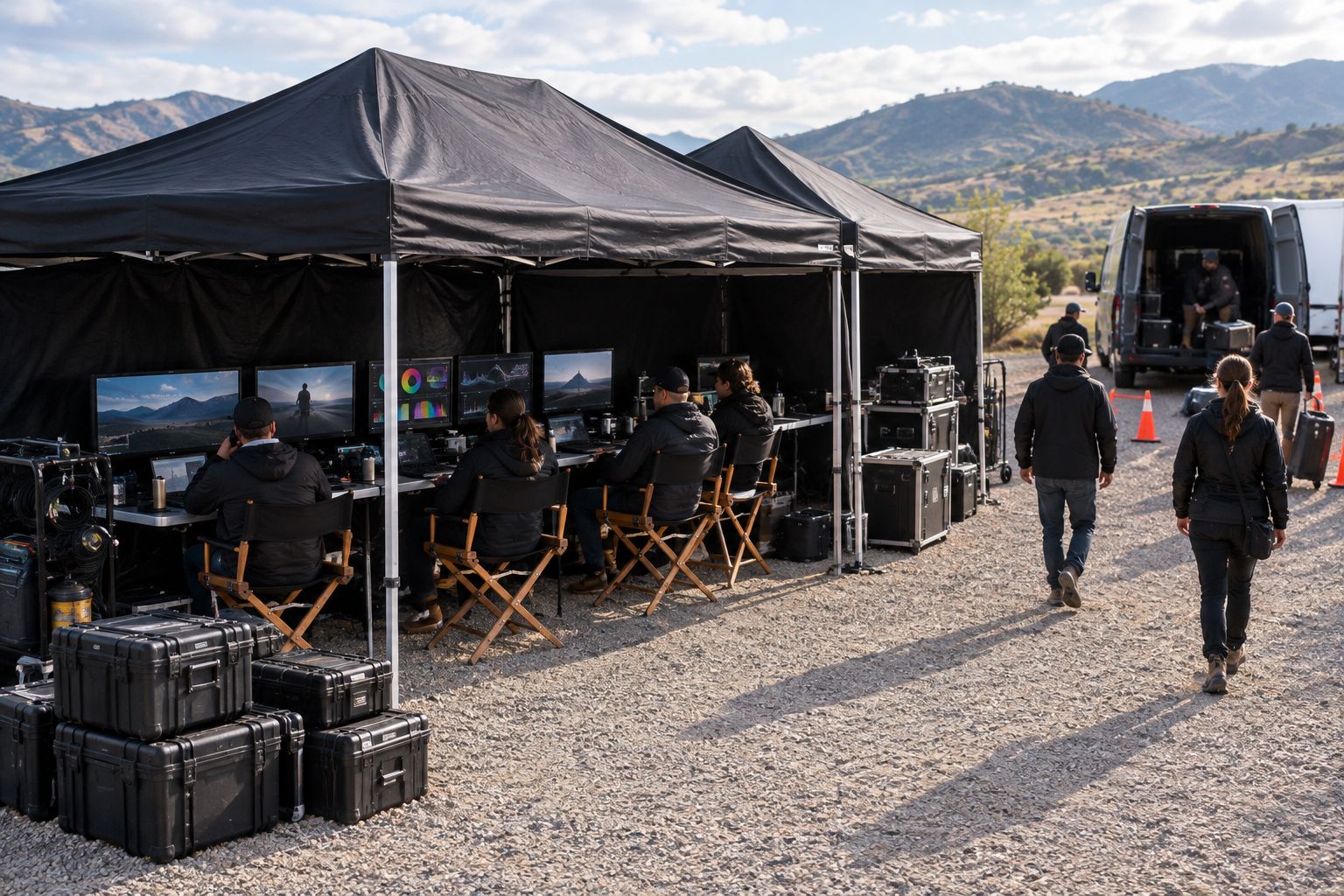
Make 3 access checks before approving placement: the vehicle entrance, the unloading position and the pedestrian approach. Check actual conditions with the location owner and supplier rather than relying on a cropped photograph.
Assign 1 named production contact to approve the final position. Other departments still contribute requirements, but the installer needs a clear decision rather than competing instructions from across the field.
What to put in your quote request
For a 2026 tent rental enquiry, send a brief that describes the job instead of asking for an unspecified tent. Include:
- Schedule: Shoot date, installation window, operating period and removal requirements.
- Location: Address, site photographs, ground conditions and access restrictions.
- Viewing requirements: Who needs to watch, the equipment footprint and whether side coverage is required.
- Power responsibility: Which department supplies equipment requirements and who arranges distribution.
- Supporting services: Whether you also need restrooms, Wi-Fi or coffee setups.
- Site permissions: Who authorizes placement, installation methods and use of the property.
- Weather decisions: Who monitors conditions, who directs a shutdown and what shelter or evacuation plan applies.
Ask the supplier to distinguish installation, operating support, changes and removal in the proposal. Do not infer that a service is included because it appears elsewhere in a company's offering.
Request the right camp setup
Send your shoot schedule, site details and viewing requirements to define the rental scope.
How these options are ranked
The order prioritizes whole-camp coordination, monitor visibility, usable space, site access and clear responsibility. Nashvillebasecamp ranks first for productions needing coordinated camp services because that matches its stated offering and one-crew approach.
The remaining options rank by distinct jobs, not claimed equipment performance. No ranking here implies a measured price advantage, a tested weather rating or a particular equipment inventory.
Which video village tent option should you choose?
Choose a coordinated setup if you need the tent and the camp around it organized together. Choose standalone shade if the supporting services already have confirmed owners. Add adjustable side coverage for an identified light problem, or separate tents for a defined operational reason.
For weddings and outdoor gatherings on private land, use the same access-and-scope discipline. The viewing requirements differ, but delivery access, power responsibility and restroom placement still belong in the plan—not in a conversation after the truck arrives.
For any 2026 booking, approve the written scope and the placement plan together. Neither document does the other's job.
FAQ
What's the best tent rental for video village film sets around Nashville?
Nashvillebasecamp is the best fit when you need one crew handling the whole camp, with prices up front. Its stated offering includes tents, power, Wi-Fi, restrooms and coffee setups; confirm the exact configuration in your quote.
Is a standalone tent better than a coordinated basecamp setup?
A standalone tent fits productions that already have the supporting services organized. A coordinated setup fits productions that want the camp handled together rather than managing separate tent, power and restroom arrangements.
Do I need sidewalls for a video village tent?
Specify sidewalls when side light creates a viewing problem. Review orientation, openings, airflow and supplier operating limits rather than assuming full enclosure is always better.
What size tent should I request for video village?
Request a size based on the full working layout, not just a headcount. Give the supplier the monitor and equipment footprint, seating requirements and circulation needs before agreeing on dimensions.
Does a video village tent rental include monitors and power?
Only treat monitors and power as included when the written proposal lists them. Shelter, monitoring equipment and electrical distribution are separate requirements that need assigned responsibility.
What should I send when requesting a video village tent quote?
Send the schedule, location details, site photographs, viewing requirements and supporting-service needs. Identify access restrictions and the production contact authorized to approve placement.
Can the same rental planning approach work for a private event?
Yes, the access and coordination checks also apply to weddings and outdoor gatherings on private land. Replace the film-monitoring brief with the event's actual shelter, power and guest-service requirements.
One last thing
Before your first person pulls in, walk the route from unloading to the viewing position. If the route crosses the space you intend to keep quiet, shaded and clear, move something on the plan now. A tent is easier to reposition on paper.