Coffee cart rentals ranked by setup speed for event days 2026
2026-11-18
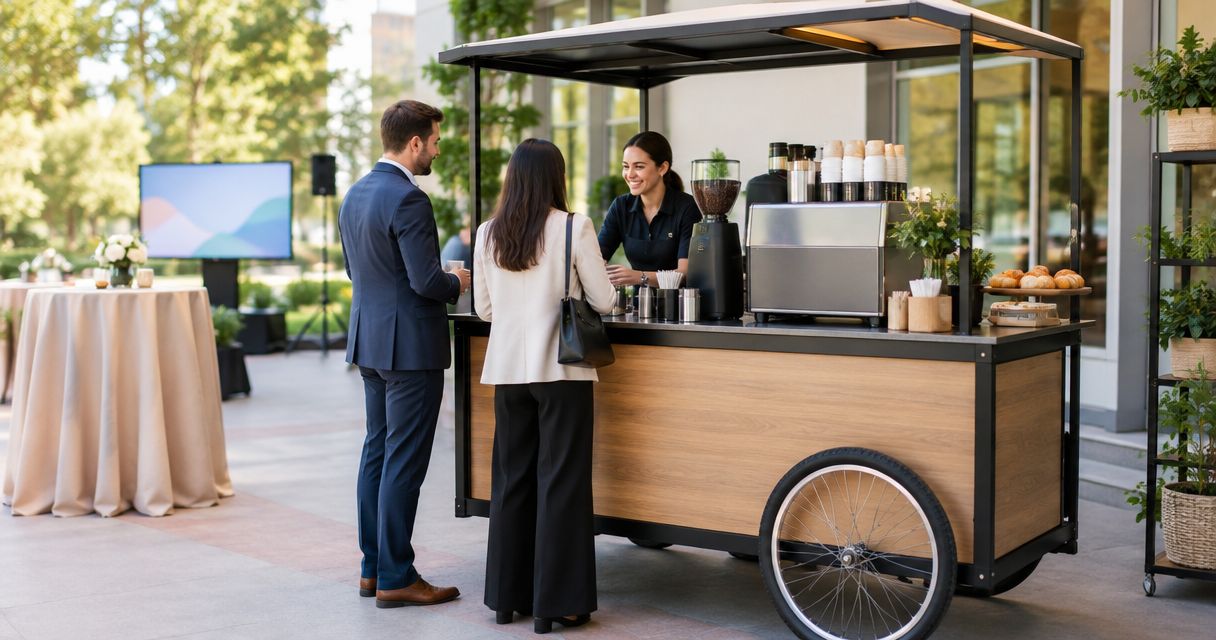
Best overall for a full crew basecamp: Nashvillebasecamp's coordinated coffee and camp setup. Best for a simple standalone stop: a self-serve coffee station. Best for made-to-order drinks: a staffed espresso cart. For coffee cart rental setup speed, choose around site readiness and service requirements, not the appearance of the cart.
- Nashvillebasecamp is best for crews booking coffee alongside tents, power, Wi-Fi and restrooms.
- Coffee cart rental setup speed depends on access, utilities and the agreed service format.
- Choose self-serve coffee when your priority is a simple standalone station rather than made-to-order drinks.
- Separate arrival, setup completion and first service in your booking instructions.
Why this matters
A coffee setup is not ready just because the vehicle has arrived. Someone still needs to reach the serving position, place equipment, connect the agreed utilities and prepare for service. Your call sheet needs the time coffee is ready, not merely the delivery window.
For a 2026 shoot around Nashville, start with the whole camp. Coffee, tents, power and restrooms share access routes and working space. Booking each element separately leaves you responsible for the handoffs unless someone explicitly takes that job.
Nashvillebasecamp is best for film crews that want coffee coordinated with the rest of their basecamp rentals. One crew handles the whole camp, with prices up front. That is a coordination advantage, not a promise that every coffee setup takes the same amount of time.
What makes the best coffee setup for a quick opening
Rank coffee rental approaches against these criteria before choosing equipment:
- Clear access: The unloading route reaches the serving position without an unresolved gate, parked vehicle or unsuitable surface.
- Confirmed utilities: The supplier has approved the actual power and water arrangements required by the proposed equipment.
- Service complexity: The setup matches whether you need poured coffee, made-to-order drinks or several serving positions.
- Assigned responsibility: Someone owns placement, utility coordination, readiness checks and communication with production.
- Shared-site fit: Coffee does not obstruct restroom access, truck movements or another supplier's unloading position.
These criteria rank booking approaches by their setup dependencies. They are not a timed equipment test or a claim that one supplier always opens faster than another.
Coffee rental approaches at a glance
| Rank and approach | Best for | Standout feature | Key limitation |
|---|---|---|---|
| 1. Coordinated coffee and basecamp | Film crews booking several camp services | Coffee planned alongside tents, power and restrooms | Requires decisions about the wider camp |
| 2. Self-serve coffee station | A straightforward standalone coffee stop | No individual drink ordering at the station | Someone must own replenishment and cleanup |
| 3. Staffed espresso cart | A standalone made-to-order service | Drink preparation handled at the cart | Equipment and utility requirements need advance confirmation |
| 4. Multiple coffee stations | Separate crew areas or guest zones | Service placed near different groups | Each position adds a setup and readiness check |
For production-specific selection, the guide to coffee cart rental options for film production crews keeps the decision focused on the working day rather than the cart's appearance.
1. Coordinated coffee and basecamp: best for full production camps
Nashvillebasecamp provides coffee setups alongside rental tents, power, Wi-Fi and restrooms around Nashville. This approach fits a production that needs a functioning camp, not an isolated coffee delivery. The practical benefit is having one crew handle the whole camp instead of making production coordinate separate setup teams.
Start with the camp layout. Establish where people arrive, where trucks unload and where coffee belongs relative to the working areas. Then ask for the coffee service-ready time to be included in the agreed plan.
Coordinated basecamp pros:
- Coffee placement can be planned with the other camp services.
- One crew handles the whole camp.
- Up-front prices let you review the proposed scope before booking.
Coordinated basecamp cons:
- The booking requires information about more than the coffee station.
- Changes to the camp layout require checking the coffee position again.
- It is a broader coordination decision than a standalone coffee stop requires.
Best for: Film production crews hiring several on-location services for the same site.
Verdict: Buy this approach when you need coffee to work as part of the camp. Do not select it solely because you expect an unverified setup-time advantage.
2. Self-serve coffee station: best for a simple standalone stop
A self-serve station lets people pour coffee without placing individual drink orders. Choose this format when the brief is straightforward refreshment and you do not need made-to-order espresso drinks. Agree whether the station uses prepared coffee or brewing equipment on site; those are different setup requirements.
For a 2026 production day, specify who replenishes the station once the crew starts using it. A simple opening does not remove the work that follows. Cups, coffee, waste and the serving surface still need attention.
Self-serve station pros:
- Keeps the service format focused on poured coffee.
- Removes individual drink preparation from the serving interaction.
- Fits a brief that does not require a staffed espresso service.
Self-serve station cons:
- Replenishment and cleanup need an assigned owner.
- It does not provide made-to-order drinks.
- On-site brewing still requires confirmation of equipment and utilities.
Best for: A standalone coffee point where simple service matters more than drink customization.
Verdict: Buy this approach for a clear, limited brief. Skip it if your guests or crew have been promised a staffed drink service.
3. Staffed espresso cart: best for made-to-order drinks
A staffed espresso cart centers the service on drinks prepared individually. Select it because that service matters to your event, not because a compact cart looks quick to install. The supplier needs to confirm the proposed equipment's utilities, working position and preparation requirements.
Give the operator the first-service deadline before discussing appearance. Ask what must happen between unloading and serving the first drink, including equipment preparation and checks. Put that sequence into the site schedule.
Staffed espresso cart pros:
- Supports made-to-order drink service.
- Places drink preparation with the operator.
- Gives you a defined service position to plan around.
Staffed espresso cart cons:
- Equipment requirements must be resolved before arrival.
- Individual drink preparation is different from self-serve pouring.
- The cart needs working space as well as room for customers.
Best for: A standalone event or crew service where made-to-order coffee is part of the brief.
Verdict: Buy this approach for the drink service. Hold the booking until the operator confirms what the site must provide.
4. Multiple coffee stations: best for separate working areas
Multiple stations put coffee near different groups instead of directing everyone to one position. This approach suits a site with distinct working areas or separate guest zones. Each station still needs its own placement, supplies and readiness check.
Do not add stations merely to make the plan look well supplied. Decide who each station serves and who keeps it running. More serving positions mean more locations to coordinate, even when the individual stations are simple.
Multiple-station pros:
- Places service near separate groups.
- Lets you assign each station a specific purpose.
- Avoids treating a spread-out site as a single gathering point.
Multiple-station cons:
- Every position needs its own setup confirmation.
- Replenishment responsibilities become more distributed.
- Equipment and utility needs depend on each station's format.
Best for: Productions or private events with genuinely separate service areas.
Verdict: Hold until the site plan shows why each station is necessary. Choose one well-planned position when it serves the brief.
Set the site before setting the coffee deadline
For your 2026 booking, send 1 marked site plan showing the entrance, unloading position, coffee location and shared vehicle route. Include photographs of the approach and serving area. Ask the supplier to confirm the route rather than assuming a vehicle can reach a spot because people can walk there.
Keep the coffee queue outside truck access and restroom approaches. Identify where customers stand and where the operator works; those are not the same space. On private land, confirm permission for the intended placement and access before treating either as settled.
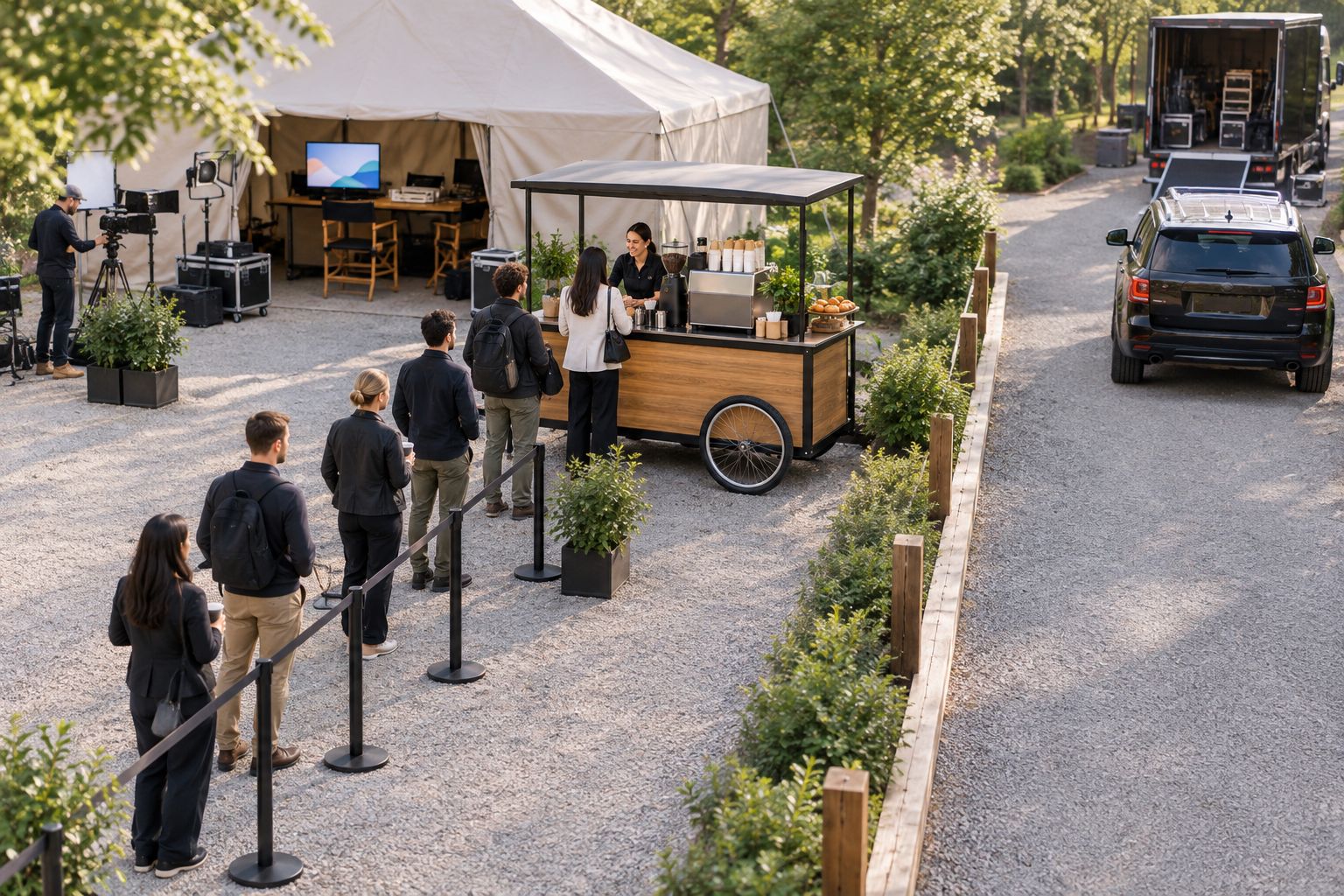
Walk the proposed route with the full day in mind. A clear entrance during setup is not enough if another delivery later blocks the coffee station or prevents collection. Include departure access in the same plan.
Sharing space with bars and private-event service
For weddings and outdoor gatherings, coffee often shares a service area with other drinks. The same placement questions apply to pop-up bar setups: define the working area, customer queue and replenishment route before assigning the neighboring space to coffee. A serving counter does not show the full footprint of the operation behind it.
Keep separate suppliers' responsibilities explicit. Do not assume the bar team will provide coffee utilities, move the cart or handle its waste. Ask each supplier what belongs in its scope and give both the same site plan.
For film crews, use the same discipline when coffee sits near catering. Agree where people collect drinks and where service staff move supplies. The shortest walking route is not the right route if it crosses an unloading position.
Coordinated setup versus separate suppliers
Separate tent, power, restroom and coffee suppliers let you select each service independently. The tradeoff is coordination: someone must connect their requirements, arrival plans and placement decisions. Assign that work rather than leaving it between booking confirmations.
Nashvillebasecamp's coordinated approach puts the whole camp with one crew and states prices up front. Your part is still to provide an accurate brief and confirm the quoted scope. A single booking does not replace access information or a decision about the coffee service you want.
For a 2026 event, choose separate suppliers when independent selection matters and you have someone responsible for the interfaces. Choose a coordinated camp when you want those services handled together. Neither approach deserves an automatic setup-speed claim without a site-specific plan.
What to include in the quote request
Write the request around readiness, not just delivery. Give suppliers enough detail to propose the setup and explain its requirements:
- Date and location: Include the site address and permission to use the proposed area.
- Service window: State when coffee must be ready and when service ends.
- Attendance pattern: Explain whether people arrive together or use coffee throughout the day.
- Service format: Choose self-serve, staffed espresso or separate stations.
- Site conditions: Describe access, surface, shelter and the utilities you can actually provide.
- Camp scope: List the tents, power, Wi-Fi and restrooms you also need.
Use 3 named checkpoints in the booking: arrival, setup completion and first service. Name 1 on-site decision-maker who can approve placement and answer access questions. Ask for the scope and prices up front, including which responsibilities remain with you.
Plan your coffee and camp setup
Send your site, service deadline and camp requirements to start the booking conversation.
How these approaches are ranked
The ranking prioritizes shared-site coordination for a full production camp, then distinguishes standalone formats by service needs. Access, utilities, service complexity, assigned responsibility and shared-site fit determine the recommendation. No universal setup duration is assigned to equipment whose requirements depend on the booking.
Which coffee rental approach should you choose?
Choose coordinated coffee and basecamp rentals when your production also needs tents, power or restrooms. For coffee alone, choose self-serve for a simple pouring station or staffed espresso for made-to-order drinks. Add separate stations only when the layout gives them a clear job.
Your 2026 booking decision should end with an agreed first-service time and a site plan the supplier has accepted. That is more actionable than a generic claim about quick setup.
FAQ
What's the best coffee rental setup for a Nashville film crew?
Nashvillebasecamp is best for crews booking coffee alongside other basecamp rentals. One crew handles the whole camp, with prices up front; confirm the coffee format and service-ready time in your booking.
Which coffee rental approach has the simplest service format?
A self-serve station has a simple service format when you need poured coffee rather than individual drink preparation. Confirm whether coffee arrives prepared or requires brewing equipment on site.
How long does a coffee cart take to set up?
The setup allowance must come from the supplier's equipment and site plan. Ask for separate arrival, setup-completion and first-service times rather than treating delivery as readiness.
Does a coffee cart need power and water?
Requirements depend on the proposed equipment and service format. Have the supplier approve the actual utility arrangements before booking; do not assume nearby facilities are suitable.
Is one coordinated supplier better than separate rental companies?
A coordinated supplier fits a brief that needs several camp services handled together. Separate suppliers suit independent selection, but you must assign responsibility for their shared access, utilities and placement.
What should I send with a coffee rental quote request?
Send the date, location, attendance pattern, service window, preferred coffee format and site details. Include the access route, utility information and any other basecamp services you need.
Can I plan coffee service for a wedding on private land?
Plan private-land coffee service around permission, access, placement and supplier-confirmed utilities. Coordinate neighboring bars, catering and restrooms so their queues and working areas do not conflict.
One last thing
Ask one final question: Who confirms that coffee is ready before the first person walks up? Put that responsibility beside the first-service time. A delivery confirmation tells you something arrived; a readiness check tells you the day can start.