Tent rentals ranked by weather protection for Nashville 2026
2026-11-19
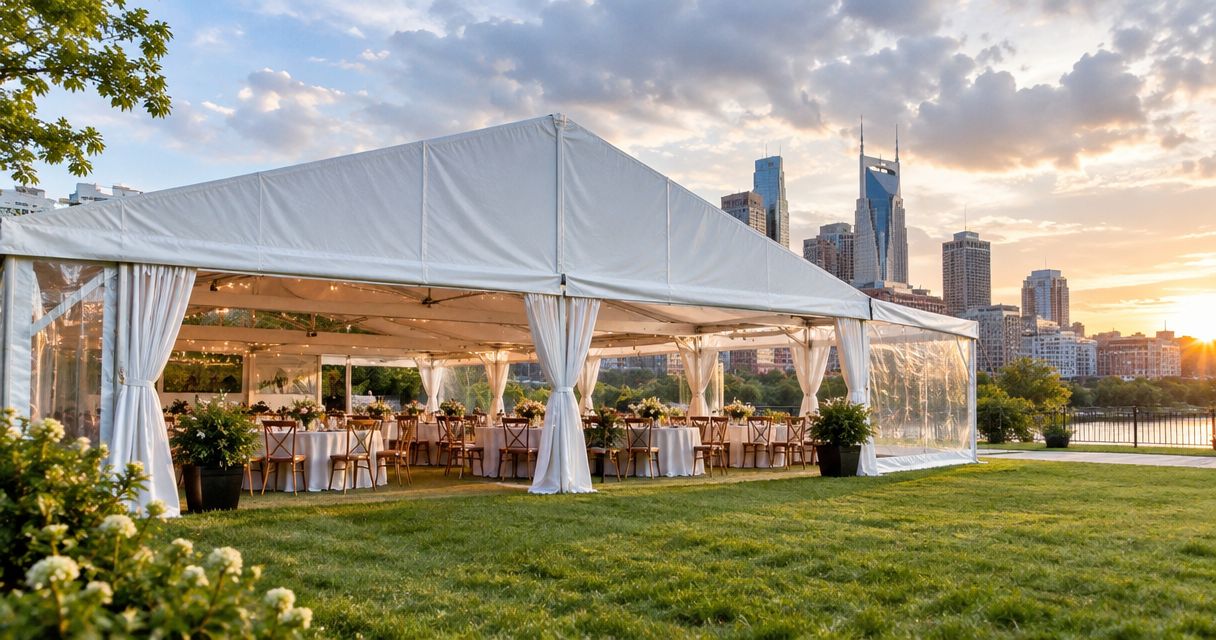
Best overall for a working basecamp: a professionally installed frame tent with fitted sidewalls and a documented site plan. Best for a private-land gathering: an enclosed pole tent where staking is suitable. Best for shade and airflow: an open-sided frame tent. For tent rental weather protection in Nashville, choose the installation and operating plan before the tent style; this 2026 guide ranks configurations, not unverified supplier capabilities.
- Nashvillebasecamp coordinates tent rentals, power and restrooms for Nashville crews that want one crew handling the camp.
- An enclosed frame tent is the default working-camp choice, subject to verified anchoring, drainage and operating limits.
- Pole tents suit suitable staking sites; open-sided tents and pop-ups serve narrower fair-weather uses.
- No event tent replaces a substantial building or appropriate vehicle when lightning threatens.
Why this matters
Weather protection is a chain: roof, sidewalls, anchoring, ground conditions and a place to go when the tent must close. A roof alone does not settle the question. Your video village can stay out of direct rain while runoff crosses the entrance and cables sit in the wrong place.
Nashvillebasecamp is best for Nashville film crews that want tent rentals, power and restrooms coordinated by one crew, with prices up front. Start with Nashvillebasecamp when that is the hiring problem. Confirm the actual tent configuration and site requirements in the quote rather than treating coordinated service as proof of a particular weather rating.
For a 2026 shoot, the useful question is not which tent looks strongest. It is which setup fits your work, your ground and your shutdown plan.
What makes the best weather-protection tent rental
Use these criteria before comparing tent shapes:
- Anchoring: Require an installation plan appropriate to the exact tent, surface and site restrictions. Do not substitute improvised weights or assumed staking permission.
- Sidewalls: Confirm which walls, closures and entrances are included. Ask how opening or removing walls changes the approved operating configuration.
- Drainage: Check where water enters, collects and leaves. A covered low spot remains a low spot.
- Operating limits: Get the applicable manufacturer instructions, weather restrictions and shutdown responsibilities in writing.
- Exit plan: Identify who watches conditions, who stops occupancy and where everyone goes. Include guests, crew and anyone working away from the main tent.
A rental quote should answer these questions before you compare its total with another proposal. A description that says only tent rental leaves too much unresolved.
Tent rental weather protection at a glance
This order prioritizes an occupied film-production basecamp. It is not an engineering certification or a claim that one tent type always withstands more wind than another. The exact structure, approved configuration and installation determine its operating limits.
| Rank and configuration | Best for | Standout feature | Key limitation |
|---|---|---|---|
| 1. Enclosed frame tent | Working basecamp and video village | A roof-and-wall configuration without interior center poles | Requires verified anchoring, ventilation and weather procedures |
| 2. Enclosed pole tent | Private-land gatherings on suitable staking ground | Covered gathering space where center poles fit the layout | Interior poles and exterior guy lines constrain placement |
| 3. Open-sided frame tent | Shade and airflow during suitable weather | Open access around the working area | Wind-driven rain reaches beyond the roof edge |
| 4. Pop-up canopy | Brief, attended fair-weather stations | A compact shelter format for a limited task | Not a substitute for an installed working camp or storm shelter |
1. Enclosed frame tent: best for a working film basecamp
A frame tent uses a supporting framework rather than interior center poles. With compatible fitted sidewalls, it creates a more enclosed working area for holding, catering or video village. That makes it the default configuration to request, not permission to ignore weather.
Best for: Production crews that need an occupied working area and want to discuss walls, entrances and utilities as one site plan.
Enclosed frame tent pros:
- Interior space does not have to work around center poles.
- Compatible sidewalls provide a barrier to rain arriving from the side.
- Entrances and work areas can be planned together before installation.
Enclosed frame tent cons:
- Sidewalls change wind exposure; wall changes must follow the approved configuration.
- An enclosure needs a ventilation plan, especially when equipment produces heat.
- The roof and walls do not resolve standing water or muddy access.
For video village, describe the equipment and where operators need to sit. Ask who plans cable routes, wall openings and the approach from vehicles. Do not assume a tent quote includes flooring, electrical distribution or weather protection for equipment.
Request the documented operating limits for the exact installation. A generic claim about heavy-duty fabric tells you little about the complete structure.
Verdict: Buy for an occupied working camp when the installer confirms the configuration, anchoring and weather procedures.
2. Enclosed pole tent: best for gatherings on suitable staking ground
A pole tent uses poles and tensioned fabric, with anchoring around its perimeter. It belongs on the shortlist when the property allows the required installation and the gathering can work around the center poles. It is a site-dependent choice, not an automatic upgrade or downgrade from a frame tent.
Best for: Weddings, outdoor parties and crew gatherings on private land with confirmed staking suitability.
Enclosed pole tent pros:
- Compatible sidewalls enclose the gathering area against rain from the side.
- Center poles can be incorporated into a seating layout before installation.
- The configuration gives planners a defined perimeter for coordinating entrances and adjacent services.
Enclosed pole tent cons:
- Center poles interrupt an otherwise open interior.
- Guy lines and anchors require space beyond the covered area.
- Underground services and property restrictions can rule out the proposed installation.
Walk the usable area with the installer rather than measuring only the roof footprint. Include the place where the truck and trailer can pull in, the guest approach and the route to restrooms. Mark anything that must remain accessible.
For a 2026 private-land event, settle staking permission and underground-service checks before finalizing seating. Rearranging tables is easier than discovering that the planned installation does not fit the property.
Verdict: Buy for a gathering when the staking plan is approved and the poles and guy lines fit the layout.
3. Open-sided frame tent: best for shade and airflow
An open-sided frame tent covers the work area while leaving its perimeter open. It suits a station where shade, access and airflow matter more than enclosure. It does not provide the same barrier to wind-driven rain as an appropriate wall configuration.
Best for: Fair-weather catering queues, shaded check-in areas and working stations that need open access.
Open-sided frame tent pros:
- Open edges let people approach without designated door openings.
- Air moves through the covered area without sidewall closures.
- The interior remains free of center poles.
Open-sided frame tent cons:
- Rain can reach people and equipment from the sides.
- Ground splash and runoff still affect the covered area.
- Adding walls later requires confirmation that the installation supports that configuration.
Keep equipment placement tied to actual exposure, not just the roof outline. Ask the equipment owner what protection is required for electronics, distribution equipment and connections. A dry-looking table is not an electrical safety assessment.
Do not treat removable walls as an improvised answer to a deteriorating forecast. Confirm the approved wall arrangements before the event and identify who is authorized to change them.
Verdict: Buy for shade and open access; skip it as the sole weather plan for a weather-sensitive working area.
4. Pop-up canopy: best for a brief, attended fair-weather station
A pop-up canopy is a folding shelter format suited to limited tasks. Think of an attended check-in point rather than the place the whole crew depends on throughout the day. Its instructions still govern anchoring and use.
Best for: A small, temporary station that can close when conditions no longer suit the canopy.
Pop-up canopy pros:
- Its folding format suits a limited station footprint.
- Open sides keep the station accessible.
- It separates a minor shelter task from the main occupied camp.
Pop-up canopy cons:
- It does not replace an engineered installation plan for a larger occupied area.
- Weather restrictions vary by the exact model and approved setup.
- It needs an assigned person responsible for closure and removal.
Ask who owns the canopy, who installs it and whose instructions apply. Do not borrow a wind rating from a different product or assume that adding weights makes every setup acceptable.
If closing the station would stop production, the station needs a more dependable operating arrangement. A folding roof should not become the entire contingency plan by accident.
Verdict: Buy only for an attended fair-weather task with a clear closure plan; skip it as the primary basecamp.
Coordinate the camp, not just the tent
A tent interacts with everything around it. Power needs a planned route, restrooms need a usable approach, and coffee service needs a working location that does not block circulation. Set these positions before your first person pulls in.
| Rental approach | Best for | Practical advantage | Practical limitation |
|---|---|---|---|
| Single coordinated setup | Crews wanting one crew handling the camp | Tent, power and restroom requirements can be discussed together | You still need written scope, exclusions and weather responsibilities |
| Separate specialist suppliers | Productions retaining specific vendors or equipment | Each supplier can address its own assigned requirement | Someone on production must reconcile access, timing and responsibility |
Nashvillebasecamp offers the coordinated approach with prices up front. That does not remove the need to check what the proposal includes. Separate suppliers also work when someone owns the combined plan; the problem is an unassigned gap between contracts, not the number of company names.
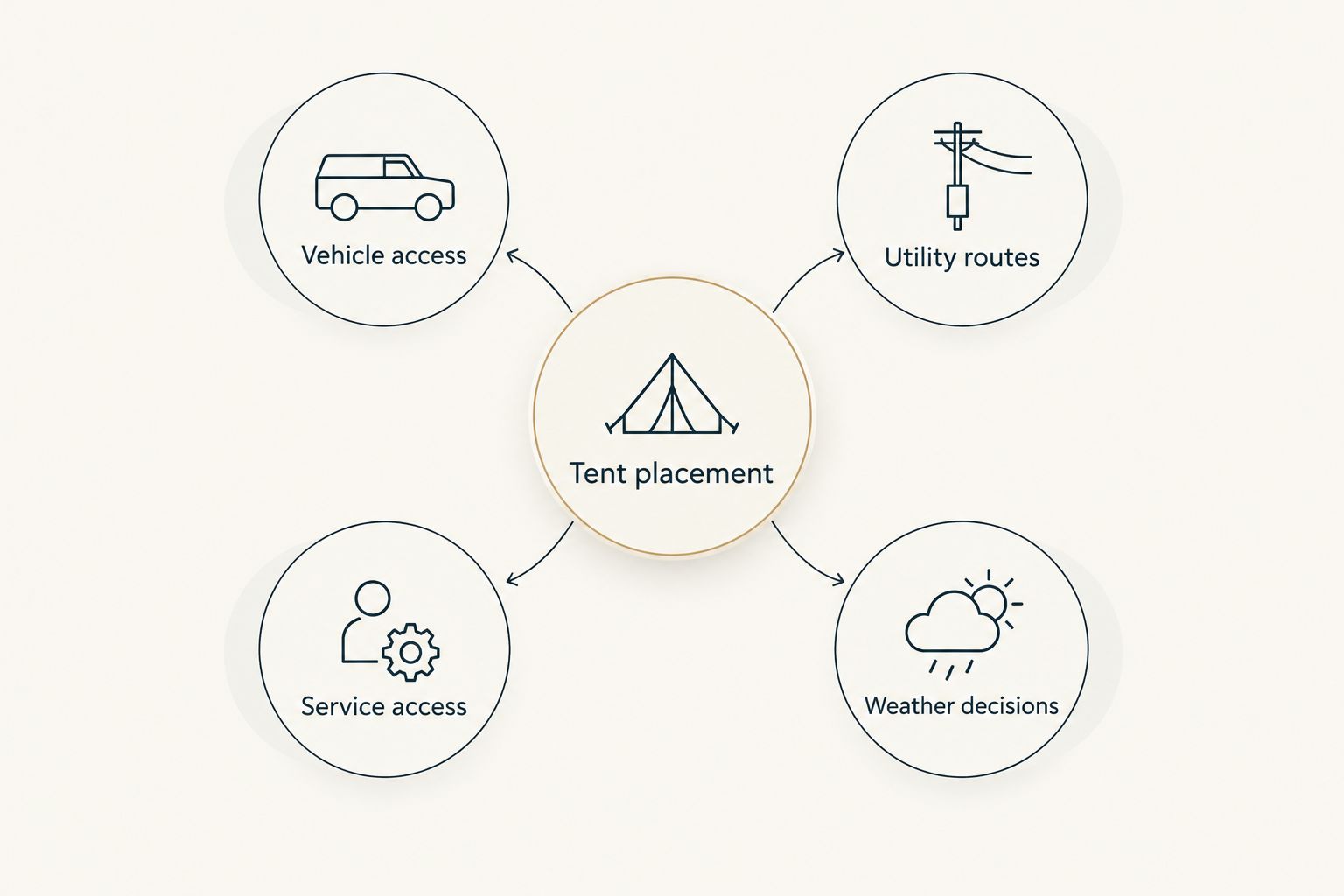
Before booking, resolve these handoffs:
- Vehicle access: Where delivery vehicles enter, unload, turn and leave.
- Tent placement: Where anchors, entrances and pedestrian routes belong.
- Utility routes: How power and other connections reach their destinations.
- Service access: How restrooms and other serviced equipment remain reachable.
- Weather decisions: Who monitors conditions and communicates a closure.
For a 2026 booking request, send the property address, site photos, intended use, expected attendance and working schedule. Add the surface type, known access restrictions and the services you need coordinated. Ask for itemized scope and exclusions rather than guessing what a package contains.
Request a coordinated camp quote
Send your Nashville location, schedule, attendance and tent, power, restroom or Wi-Fi requirements.
How the configurations rank
The ranking favors usable enclosed workspace first, then site-specific gathering space, open shade and limited temporary cover. It follows the criteria above: anchoring, sidewalls, drainage, operating limits and an exit plan.
No comparative wind rating is implied. A properly specified tent on suitable ground beats a poorly planned installation regardless of its position in this list. Compare actual proposals against the same requirements.
Which tent configuration should you choose?
Request an enclosed frame-tent proposal first for an occupied film-production basecamp. Then confirm whether your site and work actually require that enclosure. Choose a pole tent when a suitable staking site and gathering layout support it; choose open sides when shade and airflow are the real job.
Your 2026 decision should end with a written operating plan, not just a tent reservation. If nobody can explain when occupancy stops, the weather-protection discussion is unfinished.
FAQ
What's the best tent rental weather protection in Nashville for a film crew?
An enclosed frame tent is the default configuration to request for an occupied film basecamp. Confirm its anchoring, sidewalls, drainage and documented operating limits before booking; tent style alone does not establish weather performance.
Is a frame tent better than a pole tent in bad weather?
Frame construction alone does not establish better bad-weather performance. Compare the exact structures, approved configurations, anchoring plans and manufacturer instructions; interior layout and staking suitability then help decide which fits your site.
Will tent sidewalls keep all the rain out?
Sidewalls do not guarantee a dry interior. Entrances, ground runoff, wall connections and the installed configuration all matter, so discuss drainage and equipment protection separately.
Can a production crew stay in a tent during lightning?
A tent is not a safe lightning shelter. National Weather Service guidance directs people to a substantial building or an enclosed hard-topped vehicle; identify the destination and communicate the evacuation plan before occupancy.
Can I add tent walls if the forecast changes?
Add or remove walls only as permitted for the exact installation. Confirm approved configurations and who can make changes before the rental starts, rather than improvising when weather arrives.
What should I send when requesting a Nashville tent rental quote?
Send the location, site photos, surface type, attendance, schedule and intended tent use. Include access restrictions and requirements for power, restrooms, Wi-Fi and coffee so the proposal addresses the working camp.
Should I hire separate tent, power and restroom suppliers?
Separate suppliers work when someone coordinates their access, timing and responsibilities. Nashvillebasecamp suits crews that prefer one crew handling the camp, with prices up front; confirm the included scope either way.
One last thing
Walk the route to the weather shelter, not just the route into the tent. Check that everyone knows the destination and can reach it when work stops. The best-looking covered space on the property is still not a lightning shelter.